
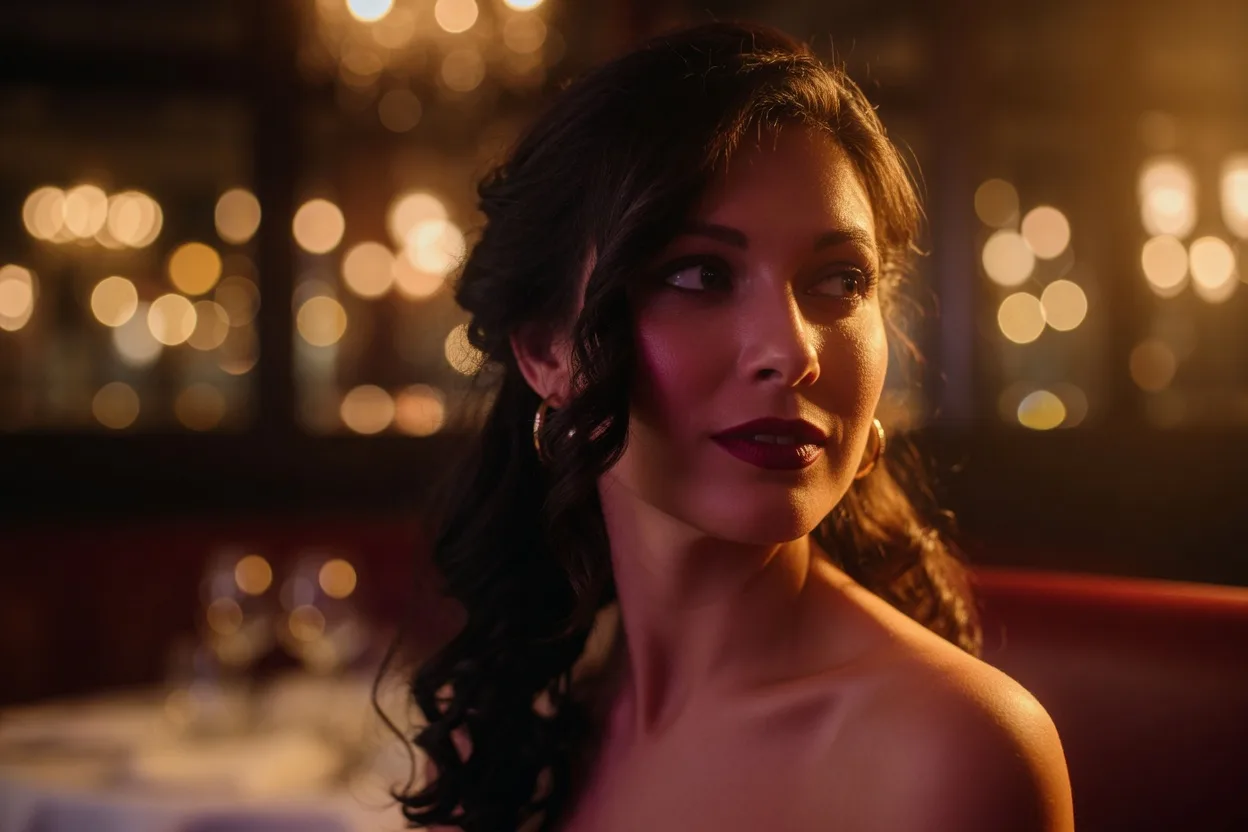
Optical bokeh, not a Portrait matte
ƒ/1.48 on Fusion Main is light gathering and real blur from the iris. Snap never substitutes a software cutout for a stop you can feel on the blades.
iPhone 18 Pro / Pro Max · iOS 27
The Fusion Main iris, treated as a lens.
Snap drives the six laser-cut blades on iPhone 18 Pro as a real aperture — continuous ƒ between 1.48 and 4.0, Av so depth of field doesn’t pulse, a cinema EVF, and a library of negatives grouped by the mechanical stop you shot. Camera.app stopped at four detents and a histogram.
Physical iris on 18 Pro / Pro Max · Av and Manual · Cinema EVF · Apple Watch crown as the ring

You set ƒ. Snap rides shutter and ISO.
Why this exists
Apple put a mechanical iris in a phone and then hid it behind four scene labels. Snap is the camera that treats those six blades the way a photographer would — as a lens, with a ring, a program dial, and a strip of negatives.
ƒ/1.48 on Fusion Main is light gathering and real blur from the iris. Snap never substitutes a software cutout for a stop you can feel on the blades.
Av locks the mechanical ƒ and rides shutter and ISO so depth of field does not pulse mid-take. Manual locks all three. Auto is there if you want it — it is not the product.
Waveform, false color, focus peaking, zebras, film gates, a gyro horizon, and a live DoF barrel. Camera.app stopped at a histogram.
Every capture lands with iris, shutter, ISO, lens, program, and white balance, grouped by the mechanical ƒ it was shot at. That is how a photographer reviews work.

What beats Camera.app
Apple’s newsroom said third-party apps get even more control across the aperture range than Camera.app’s four detents. Snap takes that API and builds a body around it.
The ring
Pull ƒ the way you would on a stills body. Snap snaps to Apple’s four official stops when you land near them, and lets you live in the developer range between. Camera Control — the capacitive button — is mapped to aperture, not zoom.
ƒ/1.8
Portrait
Apple’s recommended portrait balance — optical, not a matte.

About 50% more light than last year’s fixed ƒ/1.78. Handheld low light without begging Night mode to invent the frame.
Apple tuned ƒ/1.8 on Fusion Main for light without melting the ears off a close subject. The blur is from the blades.

This is why a variable iris exists on a phone. Narrow the blades and the back row stays in the plane of focus.

Stop down for the group, the street, the ridge. Point lights star on six laser-cut blades — Camera.app will not draw that for you.
Cinema EVF
A photographer watches exposure, focus, and horizon before the shutter — not in Photos later. Snap puts a waveform, false color, peaking, zebras, ghost frame, and film gates on the finder.
IRE across the frame. See a blown window before you commit ISO.
Tap to focus, then watch the green crawl as you pull.
Highlight clip on the finder. Not a histogram you squint at.
Skin, sky, and speculars mapped the way a DIT would want.
Iris Stack · Sunstar
Iris Stack fires ƒ/1.48, ƒ/1.8, ƒ/2.8, and ƒ/4.0 as real hardware positions — not a software HDR stack. Pick later which negative belongs in the set. Stop down to ƒ/4 and let point lights diffract on six blades.

Negatives
Photographers don’t browse a camera roll named Recents. They look at a strip of negatives and read the stop. Snap writes iris, shutter, ISO, lens, program, white balance, and scene into every file, then shelves them by mechanical aperture.
Apple Watch
Watch never talks to AVFoundation. It talks to Snap. Live JPEG preview on the wrist, shutter from the crown-side button, program and lens from the toolbar — and the crown itself interpolates ƒ across the mechanical range with haptics.

Crown = aperture. Toolbar cycles Av / M and Fusion lenses. Flash toggle on the bottom bar. The shot still writes into Negatives with the ƒ the crown set.
Pro Deck · Fusion system
White balance as a photographer names it. Kelvin when you want it. EV ±3. Shutter to 1/8000 in Manual. Scene advisor recommends a mechanical iris position from metering and mode — not a look.
120° FOV. Fixed iris. Still gets the EVF, gates, and negatives.
The mechanical iris lives here. ƒ/1.48–4.0, six blades, 48MP.
Tetraprism 4× and optical 8×. Fixed ƒ/2.8, full telemetry.
FAQ
TestFlight
iPhone 18 Pro / Pro Max, iOS 27. Request the beta and we’ll send TestFlight. The shipping floor is the physical iris — this is not a filter pack for last year’s phone.